Leaders

When you read the word, “leader” what images does this convey?

What does this word mean to you?

How have you been impacted by leaders at work, in the community?

Not all leaders are cut from the same cloth.

I know when I was “growing” up in my professional career, there were some truly dismal leaders who micromanaged, were unreasonable and weren’t looking at fostering professional development, but rather focused on exerting control and power.

This didn’t lead for me or my colleagues to build morale, motivation or being autonomous in fulfilling my responsibilities which I set out to do after I graduated and entered into the workforce.

Quite the opposite happened.

These experiences led to avoiding the leader versus being connected to the shared vision and working towards the common goal.

Luckily, I’ve also had wonderfully remarkable leaders which fostered opportunities for growth, learning and setting myself and colleagues up for success and to become leaders in the field. This was their legacy.

In order for a leader to have effectiveness in meeting goals and objectives, they are also responsible for building camaraderie and building their team up too with fostering a positive workplace.

Being our dog’s leader can go either way too.

Many common practices exist in stopping a dog’s behavior.

Using tools which punish and suppress with the goal of decreasing behaviors can lead to a dog is displaying more of the same or even at an increased rate.

Leaders who use aversive tools like shock, choke and prong collars are not teaching their dogs what to do instead.

These unreasonable leaders are just suppressing behaviors like barking and lunging on a leash or at a fence.

Muddying the waters.

Suppression of behaviors is not learning.

Suppressing behaviors doesn’t equal the behavior goes away, it goes underground.

Dogs display escape-avoidance behaviors with the use of prong, choke and shock collars.

Aversive tools lead dogs to avoid the pain or force from them.

Avoiding a punishment is not your dog learning what you want them to do instead.

These tools exist only for the humans to control unwanted behavior.

Benevolent leaders approach learning with the learner as the focus.

The focus being how to teach, motivate and encourage the learner to do what we want to see more of what is appropriate and safe to do.

Benevolent leaders not only look at how consequences influence a behavior, they also dive deep into understanding and interpreting the emotions of the learner as motivating factors for a display of a behavior.

Any benevolent leader from pet professional to pet parent can do the same.

Approaching behavior modification with a Do No Harm approach.

Assess the dog in the environment and first assess how to prevent the unwanted behavior and how to motivate and reward the behaviors you do want your dog to do.

As you establish a solid and strong reinforcement history, the more of the wanted behavior will be displayed while the unwanted behavior will whither away.

No need for adding any force or pain to get your message across to your dog to stop a behavior.

Rather, you will be having more opportunities in acknowledging all the times your dog is doing the right thing.

There will be no room for anything else.

Growling? Oh No!

Dogs don’t have a say in the training methods you use.

Dogs do have feelings and are emotional beings.

Dogs do feel pain and aggression exhibited through growling, lunging and biting can become the go to response depending on the methods used. This can lead to very serious concerns for the dog and the family.

Dogs also can also learn to suppress behaviors like growling if they are punished for doing so.

THIS IS DANGEROUS!

A dog with a suppressed communication like a growl will result in your dog going straight to a bite.

Zero warning.

I understand if you have small children in the home and you hear your dog growling and your child is nearby, you’re scared.

You’re really worried about the safety of your child and your go to response is yelling and punishing your dog.

Please stop.

Meeting a dog’s displeasure of the experience in the environment with your “mean voice” or scary body language or even physical force will make the problem worse, it will also impact your relationship with your dog which will degrade over time. It can also lead to more growling or worse like snapping and biting towards your child.

What will you do then?

Teaching children about how they impact and influence their dog’s behavior is utterly important.

Not only is this for the immediate, but learning for both the child and animal is life long.

Empowering children to understand how they can impact the world around them is also confidence building, encourages compassion and empathy.

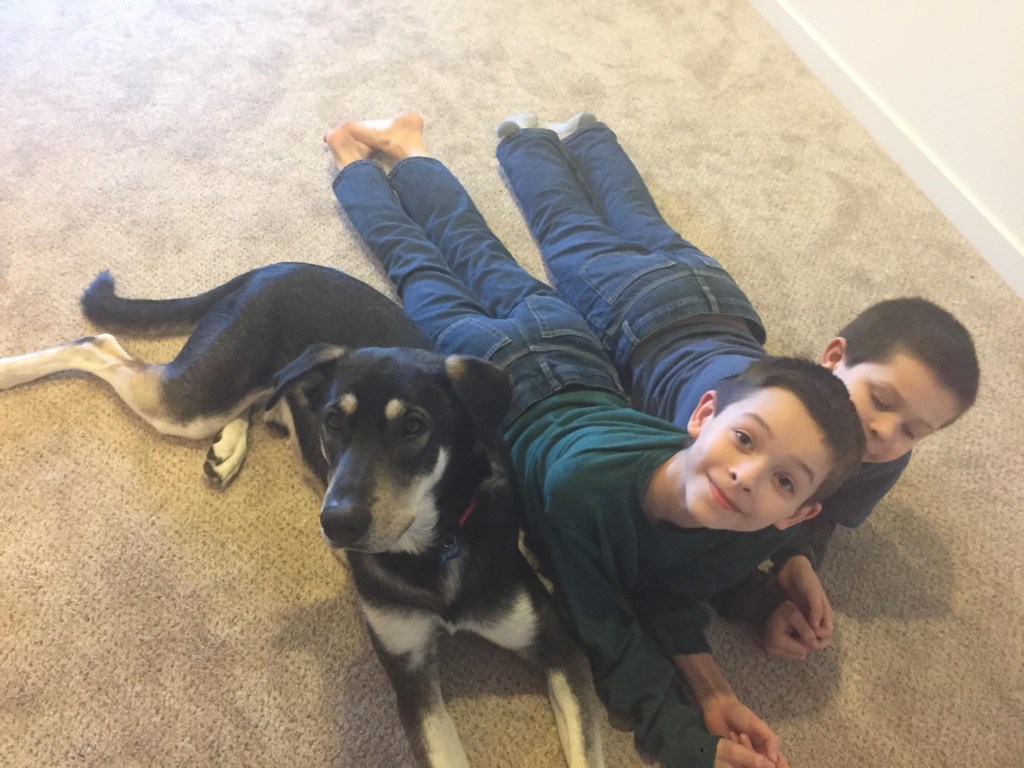
Teaching children how to safely interact with dogs, encourages your dog to seek out your child for all things.

Together, your dog and child can build a strong bond which is mutually rewarding.

In order to get here, teaching both appropriate ways of having fun and building a relationship is necessary and taking small steps.

Learning is never linear and it for sure requires repetition and everyone in the home caring for the dog and child have to be on the same page.

Not sure where to start?

Get your school aged kids enrolled into the G2G: Kids Virtual Game Series!

Graduates of the G2G Kids Program 🙂

https://fourpawsandyoudogtraining.as.me/G2GKidsProgram

Leash Walking with Frenemies

Leash reactivity is a learned behavior.

Dogs that bark and lunge while on a leash are reinforced to do so because the behavior of barking and lunging makes the bad thing (person, other dog ect) go away.

Or

Dogs that bark and lunge while on a leash do so because they learn to be frustrated greeters. The barking and lunging happens when they see the other dog or person and they anticipate the tightening of the leash.

Well, if its a learned behavior to bark and lunge on a leash, your dog can learn to be calm and relaxed in the presence of another dog.

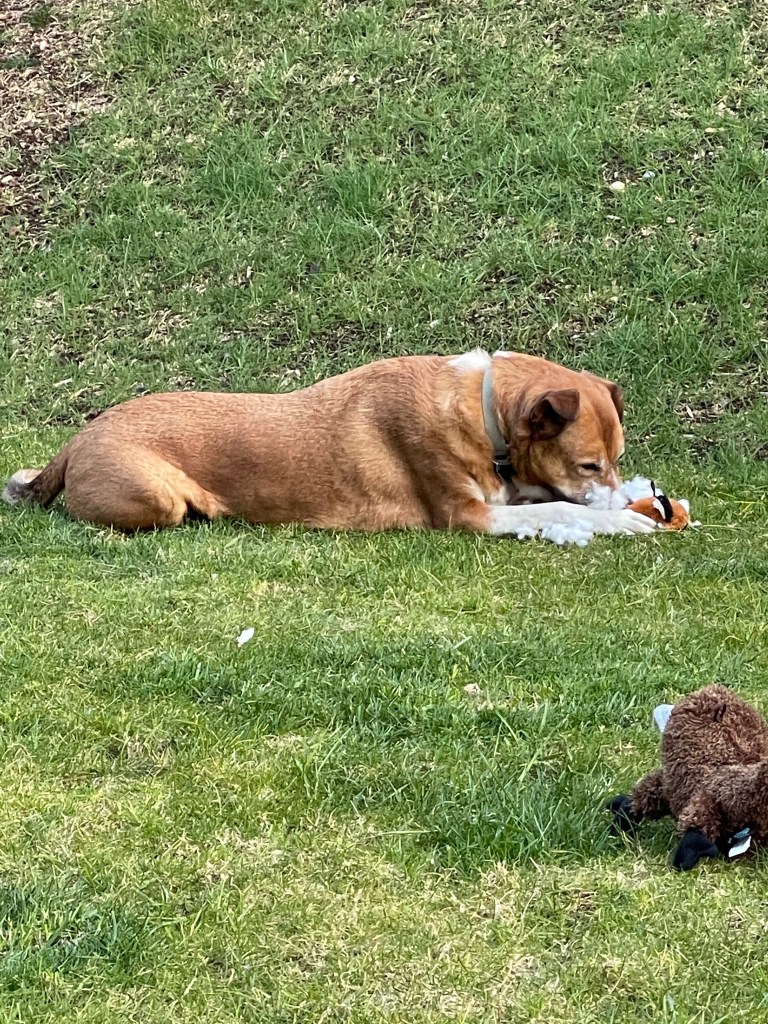
Jack for sure is one example.

Jack was for sure a menace when we first brought him home. Always barking, totally frustrated and had a hard time relaxing in the presence of another dog.

He learned to be more relaxed.

Now he’s teaching other dogs to do the same 🙂

This is another Growl to Grow client. They brought home a new dog and Charlie had some trouble with seeing other dogs, kids whatever.

My clients took to Force Free training right away.

They integrated the desensitization and counterconditioning plan into their routine.

They achieved more calm departures, door greetings and now adding into the mix leash walks.

Charlie is still learning, but the consistency of her pet parents really shows.

They’ve come a long way and they are so proud of all the learning she’s done.

AND I’m proud to say, another powerful breed not needing a choke, prong or shock collar to teach the behaviors you do want!

All that was needed was Charlie’s pet parents being benevolent leaders and established a secure and trusting relationship with her.

Do you want the same?

Find a time that works for you to set up a free Discovery Call with me: https://fourpawsandyoudogtraining.as.me/